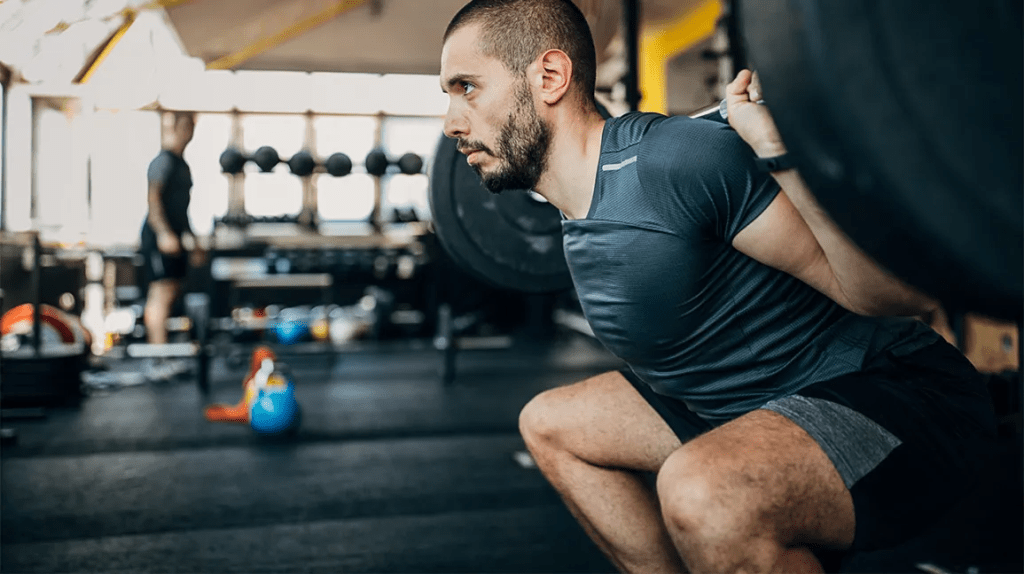
When I started lifting again after a serious surgery, the goals my doctors and trainers had for me were not completely in tune with my own. Their conservative target — that I might get personaltrainerchico.com strong enough to be crossed off their patient list — felt less ambitious than my hope of one day being able to jump my own height. But even though what we each aimed for was very much different, the benchmarks we set (walking again, doing an air squat, handling a one-mile hike) were the same.
We all train to get somewhere, even if we don’t know where to. Lifters strive to reach checkpoints, either consciously or subconsciously, and progress is automatic if you spend enough time at the gym. Sure, you’ll get stronger quicker if you follow a good program, but those who just have fun at the gym end up progressing a little bit as well.
Some of this is because of the mind-muscle connection — after doing an exercise often enough, you inevitably improve. But are there things lifters should be able to do that can tell how strong you’re becoming instead of just how a workout feels? Are there milestones you should pay attention to?
WHY WEIGHT LIFTERS USE BENCHMARKS
People love round numbers. A 2019 Washington State University study notes that milestones — calories lost, salary bonuses — are presented with zeros at the end, they have a stronger psychological hold than when they’re listed more plainly. Dieters feel more accomplished losing 300 oz. than 18.8 lbs. A check for $2000 Canadian feels bigger than $1,563 U.S.
So too in the gym. Benching 200 lbs. or squatting 300 feels like a benchmark, and lifters should celebrate when they get there. Round-plate numbers are an even bigger accomplishment. The big, tall plates strong lifters use at most gyms weigh 45 lbs., so when a squat jumps from 130 to 135 — barbells weigh 45 lbs. also — they’ve reached a new level. There’s a real satisfaction to only loading big plates on a bar. Lifting has two kinds of round numbers: ones with two zeros at the end, and the 90 lb. increments. Both measure progress.
Similar standards define non-barbell lifting. This kettlebell chart recommends what weights athletes should use. “Strong gentlemen” should swing a kettlebell no less than 24 kilos (52 lbs.) which is also the upper limit weight for an “average strength gentleman.” A “strong lady” should start at half that; an “average strength lady” two-thirds. So too for chin-ups: novice males should be able to do a handful, intermediate athletes about 10, and advanced ones double that. For women, beginners and novices are both unable to get in one rep, and advanced athletes hover around a dozen. In both cases, exact reps shift according to body weight.
WEIGHT LIFTING BENCHMARKS BASED ON BODYWEIGHT
Once lifters start programming, more accurate strength standards based on bodyweight reveal themselves. There are many of them. One formulation says decent male lifters should be able to squat 1.5 times body weight; good lifters double, and advanced lifters 2.5. Deadlifts hover at around the same ratio and advance slightly past squats as a lifter gets stronger. These benchmarks — reaching a 1.5 bodyweight squat for men, and near-bodyweight number for women — create the foundation of most training programs. Once that number is reached, a lifter is considered adapted — not a beginner — with their strength pathways turned on.
These benchmarks are a function of time. Getting to a 1.5/1 bodyweight squat, all things told, is just about automatic if the lifter is healthy, and puts in the work. (To be sure, the work is a lot.) Two takes a while, and two and a half is quite hard and will take even longer. The triple bodyweight squats put up by competitive powerlifters might take a decade to reach. After a certain point, every pound on the bar gets much tougher.
But bodyweight strength standards don’t take lifters’ histories or the health issues that might hang them up into account. A lifter who can’t move up and down with a bar on their back — because their glutes might be destroyed from a day job, or due to bad cardio — should worry less about hitting a round number during a certain time frame than getting objectively strong and limber enough to get through a workout.
 Site Title
Leave a comment